
Introduction
Ask three vendors whether you need a CASB, an SSE platform, or full SASE, and you'll likely get three different answers — each pointing toward whatever they happen to sell.
That overlap creates real confusion for IT leaders trying to secure SaaS applications, remote users, branch offices, and cloud workloads at the same time.
Getting this wrong has consequences. Pick the wrong scope and you risk exposed cloud data, redundant tools, or a network architecture that never gets addressed.
A 2024 Thales Cloud Security Study reported by the Cloud Security Alliance found that 44% of organizations surveyed had experienced a cloud data breach, with 31% tracing it back to misconfiguration or human error.
Here's the short version: CASB and SASE aren't interchangeable. CASB solves a specific cloud application problem. SASE is a broader architecture that often includes CASB as one piece. Let's break down where each one fits.
Key Takeaways
- CASB delivers visibility, data protection, compliance support, and threat detection for cloud services.
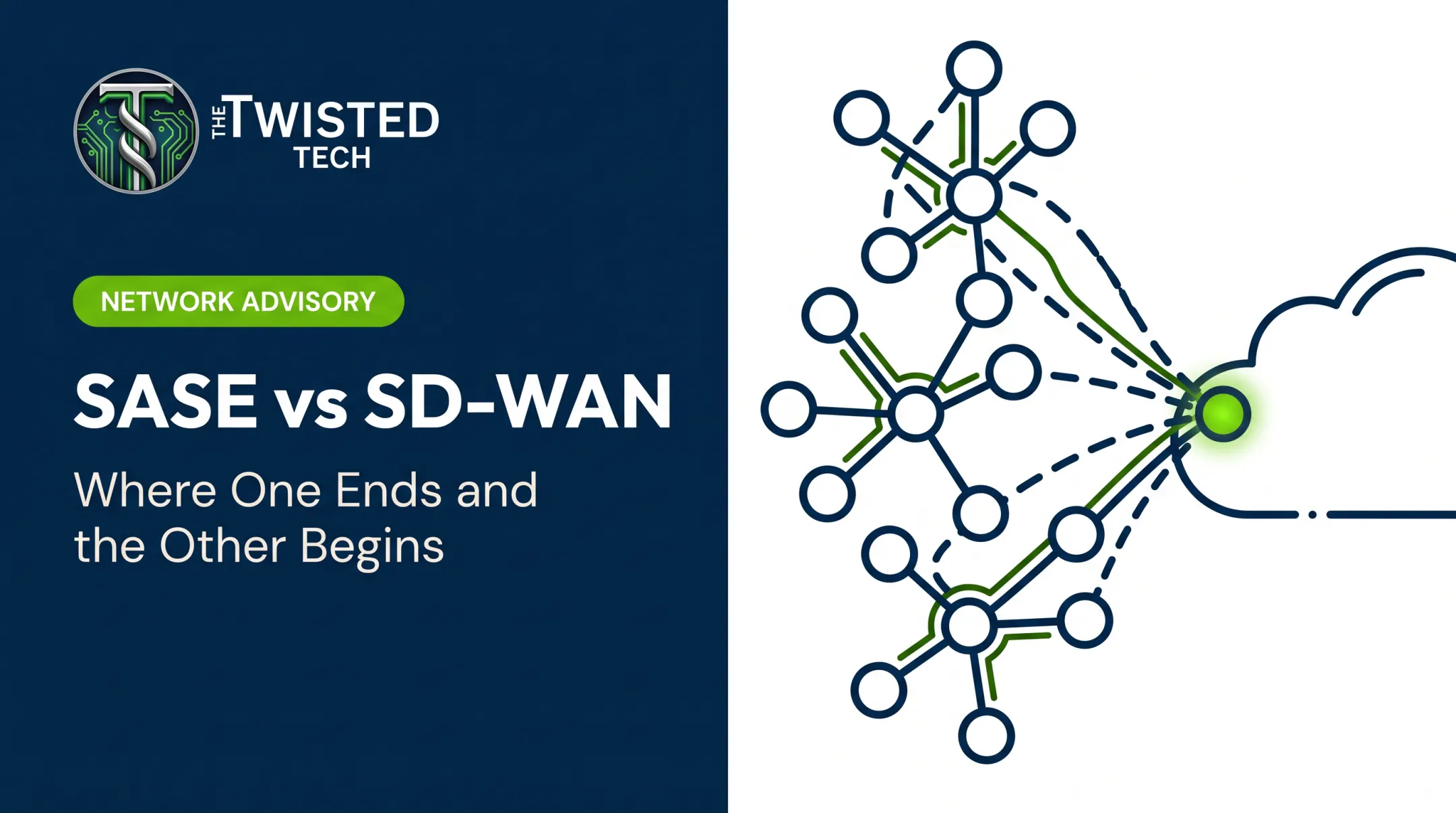
- SASE converges networking and security, typically combining SD-WAN, SWG, FWaaS, ZTNA, and CASB into one framework.
- Standalone CASB still works, though it's often bundled into broader SSE or SASE platforms.
- Choose based on infrastructure, cloud footprint, and IT bandwidth—not which term sounds bigger.
- A phased or blended approach often beats an all-or-nothing decision.
CASB vs SASE: Quick Comparison
Here's how CASB and SASE stack up side by side:
| Factor | CASB | SASE |
|---|---|---|
| Primary purpose | Govern access to and protect data in SaaS and other cloud services | Combine secure connectivity and cloud-delivered security across users, devices, apps, branches, and workloads |
| Scope of protection | Cloud app usage, data flows, shadow IT, SaaS compliance | Internet access, private app access, branch connectivity, plus cloud services |
| Core capabilities | Visibility, DLP, access controls, threat monitoring, compliance reporting | CASB, SD-WAN, SWG, FWaaS, ZTNA, centralized policy management |
| Deployment | Added to an existing security stack as a focused control | Broader architectural shift involving traffic steering and network redesign |
| Best fit | SaaS visibility, shadow IT, cloud data governance | Distributed connectivity plus security modernization |
Notice the overlap: CASB capabilities show up in both columns. That overlap is exactly why this comparison gets confusing.
What is CASB?
A cloud access security broker (CASB) sits between your users and the cloud services they access, enforcing policy at that checkpoint. Analysts commonly describe CASB capabilities around four pillars, a framework the Cloud Security Alliance attributes to Gartner's original CASB research:
- Visibility — into sanctioned and unsanctioned (shadow IT) application use
- Compliance — controls that support regulatory and industry requirements
- Data security — including data loss prevention (DLP) for sensitive information
- Threat protection — detecting malware, compromised accounts, or risky behavior
For a growing organization, those four pillars translate into practical outcomes. You learn which cloud apps employees actually use, where sensitive data travels, and how to enforce consistent access rules instead of ad hoc exceptions.
Coverage Varies by Provider
CASB can extend protection across SaaS, IaaS, and PaaS environments, but not every provider covers all three equally well. Some focus heavily on SaaS discovery and DLP; others extend deeper into infrastructure-layer monitoring.
You also choose between standalone CASB and CASB bundled into an SSE or SASE platform. Standalone tools tend to offer deeper, more mature functionality for cloud-app control. Bundled CASB trades some of that depth for unified management and fewer vendor relationships.
Use Cases of CASB
CASB tends to fit organizations dealing with:
- Numerous cloud applications and limited visibility into what's actually in use
- Unmanaged file sharing across platforms like Google Drive, Box, or OneDrive
- Sensitive data stored in cloud platforms without consistent controls
- Compliance reporting requirements tied to specific frameworks
In practice, teams use CASB to:
- Identify shadow IT
- Block risky uploads
- Apply policies by user role or device
- Monitor activity across sanctioned and unsanctioned apps
Netskope's published case involving Ascensus offers a documented example. The company's security team used CASB to gain insight into cloud application use and set upload policies for sensitive data. The team reportedly saw which cloud apps employees accessed within a day of configuration.
Ascensus later added a secure web gateway from the same vendor, so later results reflect a combined deployment, not CASB alone.
What is SASE?
Secure access service edge (SASE) is a cloud-delivered architecture that converges networking and security functions and delivers them closer to where users, devices, and applications operate, rather than routing everything back through a central data center.
Gartner's original 2019 research, which coined the term, describes SASE as combining wide-area networking with several security functions:
- SD-WAN for connectivity across locations
- SWG (secure web gateway) for web access controls
- FWaaS (firewall-as-a-service) for network-level protection
- ZTNA (zero trust network access) for application-specific access
- CASB for cloud application security

That's the model on paper. In practice, providers package these differently, and maturity varies widely between vendors. Verify what a specific SASE offering includes before assuming full coverage.
Where SASE Fits Operationally
SASE aligns naturally with remote and hybrid work, multiple office locations, direct internet access, and cloud-first application strategies. Organizations moving away from legacy hub-and-spoke network designs often land here.
Potential benefits include centralized policy management, less point-solution sprawl, and more consistent enforcement across locations. Whether you realize those benefits depends heavily on implementation quality, not just the label on the contract.
Use Cases of SASE
SASE tends to make sense when an organization is:
- Modernizing branch connectivity
- Supporting a distributed workforce
- Replacing aging VPN infrastructure
- Consolidating a sprawling security stack into fewer platforms
Sixt, the car rental company, provides a documented example. Its U.S. operation (spanning 80 offices and over 3,000 connected devices) routed traffic through Europe, creating latency issues.
After moving to a cloud-native SASE approach, Sixt reported 15% better transatlantic latency, a 15-20% reduction in network-maintenance and capacity-planning costs, and branch downtime dropping from 10 hours per month to under one hour. These are company-reported results, not guaranteed outcomes for every deployment.

SASE may be premature if:
- Cloud adoption is still limited
- Your existing network architecture is stable and performing well
- Your team isn't ready for a migration project of this scale
- The actual problem is narrow SaaS governance, not connectivity
CASB vs SASE: What is Better?
"Better" depends entirely on which problem you're actually trying to solve. Cloud application governance points toward CASB. Converged connectivity and security modernization points toward SASE.
Consider these factors before deciding:
- Volume and distribution of cloud/SaaS usage
- Number and geographic spread of office locations
- Remote-user and private application access needs
- Current SD-WAN or MPLS investments
- Existing security tools already in place
- Compliance obligations and internal expertise
- Tolerance for a multi-year migration
Choose CASB when your immediate priority is SaaS discovery, shadow IT visibility, DLP, or compliance reporting, especially if your network architecture already works fine.
Choose SASE when you need to modernize branch and remote connectivity, unify controls across locations, or reduce a fragmented tool stack.
The Phased Approach Often Wins
Gartner's 2025 Strategic Roadmap for SASE Convergence notes that reaching a complete SASE framework takes three to five years for most enterprises.

Near-term guidance is practical: retire standalone CASB, SWG, and VPN appliances as they hit end of life, replace them with cloud-based SSE where stronger security controls are needed, then expand into full networking convergence later.
In other words, starting with CASB or SSE capabilities and building toward SASE as requirements mature is a legitimate path that matches how most enterprises actually adopt these platforms.
Vendor Evaluation Checklist
Whichever path you're leaning toward, evaluate providers against:
- Component coverage and maturity (not just marketing claims)
- Policy consistency across modules
- Identity and endpoint integration dependencies
- Traffic inspection depth and logging/reporting detail
- Data residency and service availability guarantees
- Contract terms, implementation responsibility, and exit options
An independent, vendor-neutral perspective helps at this stage. The Twisted Tech does not sell CASB or SASE platforms. Its Connectivity, Network & Infrastructure Advisory and Cybersecurity Advisory work starts with your business requirements, locations, users, and compliance needs, then evaluates which technologies and providers actually match.
Real-World Examples
Ascensus (CASB path): Facing limited visibility into cloud app usage and sensitive data flows, this organization deployed Netskope's CASB to identify shadow IT and enforce upload policies. The team gained visibility into cloud application activity within a day of setup. It was a narrow, well-defined problem that didn't require a full network overhaul.
Sixt (SASE path): With 80 U.S. offices and thousands of devices experiencing latency from transatlantic routing, Sixt needed connectivity and security modernization together. Its cloud-native SASE deployment delivered measurable latency and cost improvements, plus a sharp drop in branch downtime.
The situational takeaway:
- If your challenge looks like Ascensus's (scattered SaaS usage, no visibility, compliance pressure), a focused CASB likely solves it faster and cheaper.
- If it looks like Sixt's (multiple locations, connectivity headaches, tool sprawl), SASE's broader scope is probably worth the heavier lift.
If you're facing a CASB, SSE, or SASE decision, or a renewal deadline is approaching, get independent requirements guidance before committing. The Twisted Tech can help document what you actually need, compare provider proposals, and plan implementation, without a stake in which vendor you choose.
Conclusion
CASB and SASE solve different-sized problems. CASB is a focused capability for governing cloud applications and protecting the data flowing through them. SASE is a broader architecture built to converge connectivity and security across an entire distributed operation. The broader or more modern option is not automatically the right fit.
The better question is what your organization actually needs right now. Base that decision on:
- Cloud usage and where sensitive data lives
- Distributed access needs across sites and remote work
- Current infrastructure and how much complexity your team can manage
- Implementation readiness and the outcomes you need to deliver
Choose the approach that matches those requirements, not the label on the box. If you want an independent read on fit before you commit, The Twisted Tech helps growing organizations evaluate security and connectivity options against real business objectives.
Frequently Asked Questions
Are CASBs still relevant?
Yes. CASB capabilities remain relevant for cloud visibility, SaaS governance, data protection, and compliance, whether deployed as a standalone tool or bundled inside an SSE or SASE platform.
Is SASE better than VPN?
SASE offers broader, cloud-delivered security and identity-based access compared to a traditional VPN. Whether it's "better" depends on your applications, user distribution, and how ready your organization is for a migration.
What is a CASB in cybersecurity?
A CASB is a security control positioned between users and cloud services, providing visibility, access control, data loss prevention, and threat protection to govern how cloud applications are used.
Is CASB part of SASE?
Yes, CASB is commonly included as a security component within SASE architectures. It can also be purchased and operated as a standalone capability outside of SASE.
Should a small or growing organization choose CASB or SASE?
Start with your primary gap. Focused cloud governance issues point toward CASB, while distributed connectivity and security consolidation needs may justify SASE or a phased combination of both.
What's the difference between SASE and SSE?
SSE covers the security portion of SASE (typically CASB, SWG, and ZTNA), while full SASE adds networking capabilities like SD-WAN. Vendor terminology varies, so confirm what's actually included.